Get Started with Tenable MSSP Portal
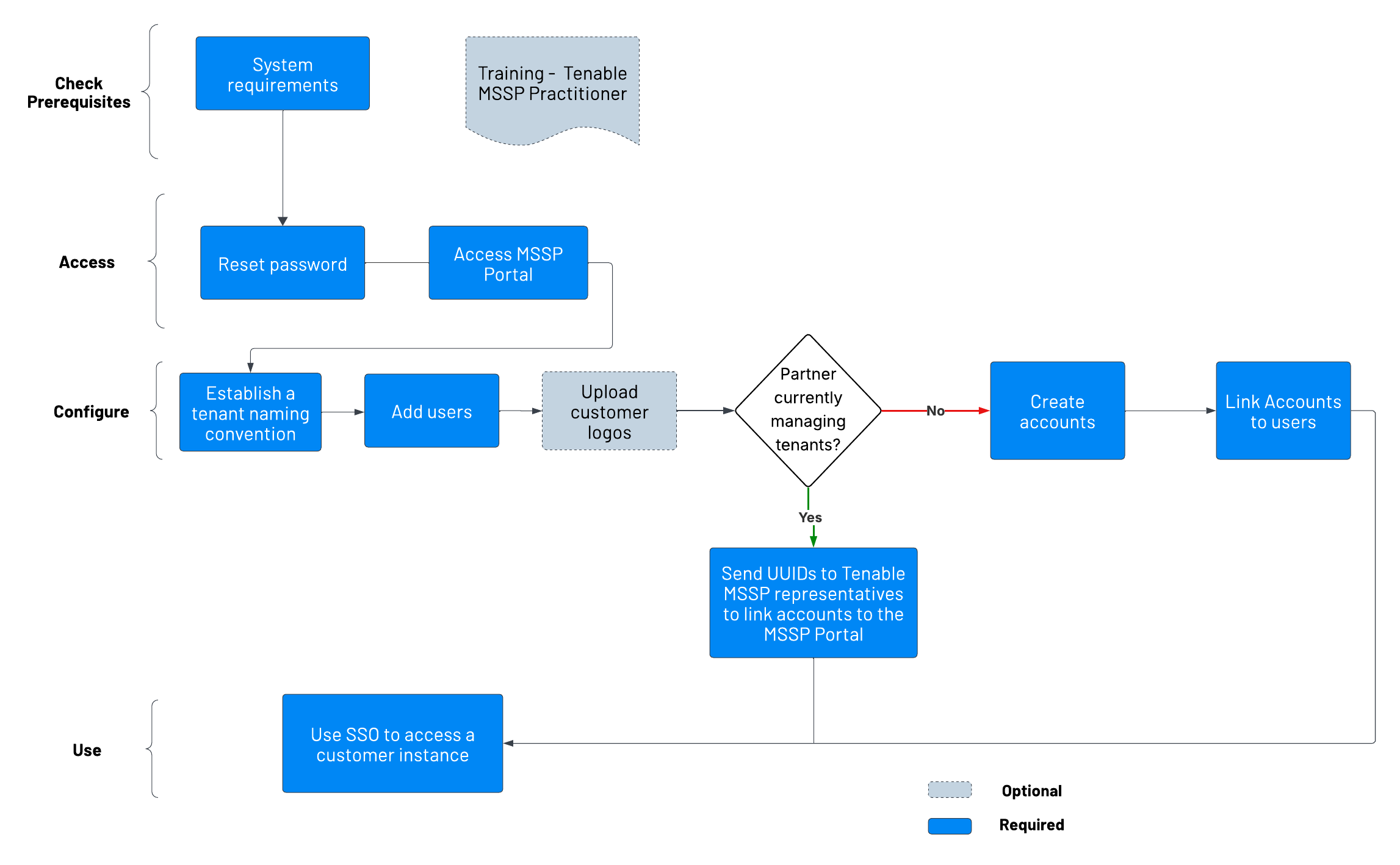
Use the following getting started sequence to configure and mature your Tenable MSSP Portal deployment.
- Prepare
- Create Tenable MSSP Portal Users
- Establish a Tenant Naming Convention
- Configure Tenable MSSP Portal Customer Accounts
- Use Single Sign-On to Access a Customer Tenable One Vulnerability Management Instance
Prepare
Before you begin, prepare your use case for Tenable MSSP Portal.
To plan your use case for Tenable MSSP Portal:
- Get your Tenable MSSP Portal access information and starter account credentials from your Tenable representative.
-
Identify the users in your organization that you want to have access to Tenable MSSP Portal, and gather appropriate information (e.g., email address, appropriate user permissions).
- Compile a list of Tenable One Vulnerability Management customer accounts you want to monitor through Tenable MSSP Portal, and gather appropriate information (e.g., email address, company name, and address).
Create Tenable MSSP Portal Users
Create users for any administrators you want to have access to Tenable MSSP Portal.
Establish a Tenant Naming Convention
Tenable recommends using your real email address as your Tenable MSSP Portal username since you have to log in to the portal on a regular basis to manage your customers.
Tenable recommends using a naming convention such as [email protected] as the “Primary Admin” on “Child tenants”.
You can create usernames under the same domain as the “Primary Admin”. If your service allows your customers to log in directly to their Tenable tenant, then you can add the customer's domain as an approved domain. This allows you to create usernames under your customer’s domain. For more information, see Add a Domain to your Account
Configure Tenable MSSP Portal Customer Accounts
Configure accounts for the customers you want to monitor through Tenable MSSP Portal.
Use Single Sign-On to Access a Customer Tenable One Vulnerability Management Instance
Use Tenable MSSP Portal's single sign-on capabilities to access the Tenable One Vulnerability Management instances associated with your configured customer accounts.